7 Types of Pre-Employment Tests to Improve Your Hiring Outcomes
Resumes are becoming seemingly more polished, but hiring is becoming more skill-oriented than ever before. Organizations are looking for talent that doesn’t only look good on paper, but has the right skills to succeed at the role from day one. This is even more important when you’re hiring at scale. For a single role, you may receive hundreds of applications, making it nearly impossible to evaluate every candidate consistently.
Pre-employment tests help solve this problem by introducing objective, measurable insights into the candidate profiles. You can review candidates’ cognitive skills and validate technical expertise and communication skills early on to prioritize top talent.
What is a Pre-employment Test?
A pre-employment test helps employers evaluate whether a candidate possesses the abilities, knowledge, skills, behaviors, or personality traits required for a particular role before making a hiring decision. These are interactive tests, like answering scenario-based questions, writing code in real time, pattern matching games, etc., that candidates complete as part of their job application.
A resume tells you where someone has worked. An interview reveals how they communicate and present themselves. A pre-employment assessment provides evidence of what they can actually do.

You can assess reasoning and learning ability, measure practical job skills, technical expertise, communication ability, ethical decision-making, or behavioral tendencies. The type of assessment depends entirely on what success looks like in that specific role. Based on how candidates perform across these practical assessments, you get strong signals to make more confident hiring decisions.
Why use Pre-Employment Tests for Hiring?
When combined with interviews, assessments strengthen them by providing measurable evidence that supports better decision-making. Instead of asking candidates whether they possess a particular skill, employers can evaluate that skill directly.
Better Hiring Accuracy
Candidates are evaluated based on demonstrated abilities instead of assumptions or self-reported experience. This reduces the risks of hiring someone who interviews well but struggles to perform once they’re on the job.
More Consistent Candidate Evaluations
Pre-employment assessments introduce consistency by ensuring every applicant completes the same test and is evaluated against the same criteria. This makes it easier to compare candidates fairly, especially when multiple recruiters or hiring managers are involved.
Faster Screening for High-volume Hiring
Instead of relying entirely on paper-perfect resumes, recruiters can set up assessments to evaluate real skills before moving candidates to the next stages. It helps hiring teams quickly identify candidates who meet the required benchmarks, allowing recruiters to focus their time on top candidates.
Improved Quality of Hire
Assessments help identify candidates whose skills, reasoning abilities, and workplace behaviors align with the demands of the role. This leads to stronger job performance, smoother onboarding, and improved long-term retention.
Better Candidate-Role Matching
Not every qualified candidate is suited for every position. Someone may have excellent communication skills but struggle with analytical work. Another candidate may be technically exceptional yet less comfortable in highly collaborative environments. Pre-employment assessments help recruiters understand these differences early, allowing them to match candidates with roles where they’re most likely to succeed.
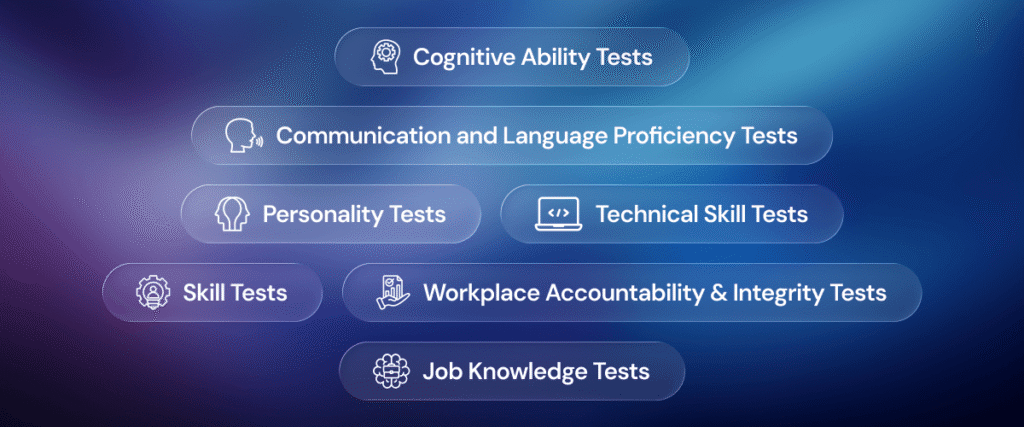
Types of Pre-Employment Tests
1. Cognitive Ability Tests
Cognitive ability tests measure how effectively they think. They assess a person’s capacity to process information, recognize patterns, evaluate evidence, solve unfamiliar problems, and make logical decisions – abilities that are valuable across virtually every profession. This test helps predict how well candidates learn, adapt, and approach problems at the workplace.
Cognitive assessments evaluate:
- Numerical reasoning
- Verbal reasoning
- Logical reasoning
- Abstract reasoning
- Critical thinking
- Pattern recognition
- Analytical thinking
- Data interpretation
For example, a candidate may need to identify the next number in a sequence, interpret a business chart, compare written arguments, recognize patterns in diagrams, or solve logic puzzles.
Many of these assessments are timed to help evaluate how efficiently candidates process information while maintaining accuracy.
When to Use Cognitive Ability Tests
- Campus Recruitment and Graduate Hiring Programs: Cognitive assessments help identify candidates who can quickly absorb new information, adapt to workplace expectations, and develop into high-performing employees despite having limited professional experience.
- Roles that Require Complex Problem-solving: Positions in engineering, finance, consulting, research, business analysis, and operations involve interpreting data and making informed decisions. Cognitive testing provides insight into how candidates approach such unfamiliar challenges.
- Jobs Where Employees Work Independently: Some roles may require individuals to analyze situations, troubleshoot issues, and make decisions without constant supervision. Measuring reasoning ability helps employers understand whether candidates can confidently navigate unfamiliar situations and arrive at logical solutions on their own.
2. Communication and Language Proficiency Tests
Communication and language proficiency tests are designed to evaluate how effectively candidates understand, process, and convey information in real workplace situations.
Whether an employee is responding to customers, collaborating with teammates, documenting processes, or presenting ideas to leadership, the ability to communicate clearly has a direct impact on productivity and business outcomes. So, these assessments may evaluate:
- Writing comprehension and communication, like emails, explainer documents, and sales pitches.
- Business grammar, vocabulary, and punctuation
- Reading comprehension
- Spoken language fluency and verbal communication
- Active listening
For example, a customer support candidate may be asked to respond to an unhappy customer, a recruiter may need to write an interview invitation, and a sales representative might explain a product to a prospective client.
For organizations operating globally, language proficiency assessments help understand how well candidates can communicate with customers or offshore teams. Language proficiency can significantly influence collaboration, customer satisfaction, and overall productivity.
When to Use Communication and Language Proficiency Tests
- Customer-facing roles like support representatives, sales representatives, account managers, hospitality staff, and help desk professionals. Across these roles, employees spend most of their day interacting with customers, so communication directly affects customer experience.
- Recruitment, HR, and people management roles because they communicate with candidates, employees, managers, and leadership every day. Testing written and verbal communication helps ensure they can handle sensitive conversations, prepare professional documentation, and represent the organization effectively.
- For global organizations hiring across borders, language proficiency tests can be used to ensure candidates can collaborate with international teams and support customers without communication barriers affecting performance.
- Remote and hybrid workplaces where written communication is critical and distributed teams rely heavily on email, chat platforms, project documentation, and virtual meetings. Candidates who communicate clearly in writing are often better equipped to work independently and collaborate effectively across locations and time zones.
3. Technical Skill Tests
Technical skills tests require candidates to demonstrate their knowledge by completing work similar to what they’ll encounter on the job. These assessments are a standard part of hiring for engineering and technology roles.
This often includes coding exercises where candidates write, debug, optimize, or review code. The goal is to assess whether candidates can write clean, maintainable code, identify performance bottlenecks, troubleshoot production issues, and make thoughtful architectural decisions. You can choose the programming language, like C++, Python, SQL, etc., and ask candidates to write and optimize code in that language.
When to Use Technical Skills Tests
- While hiring for front-end developers, back-end engineers, full-stack developers, mobile app developers, and similar roles, technical assessments help verify that candidates can write reliable, maintainable code.
- Use technical tests to hire for data professionals who work with large datasets, statistical models, machine learning algorithms, and visualization tools to evaluate analytical thinking alongside practical implementation skills.
- Organizations hiring high-volume technical candidates include coding assessments to objectively shortlist qualified candidates before scheduling time-intensive technical interviews.
4. Personality Tests
Two candidates can possess identical technical skills and similar work experience yet perform very differently once they join the same organization. The difference often comes down to how they work rather than what they know.
Personality assessments help employers understand how candidates collaborate across teams, thrive in fast-paced environments, and how they work independently. These tests examine traits such as:
- Conscientiousness
- Emotional stability
- Adaptability
- Dependability
- Collaboration
- Leadership tendencies
- Motivation
- Openness to change
- Initiative
- Conflict management
Rather than answering right-or-wrong questions, candidates respond to statements describing workplace behaviors or preferences. For example, they may indicate how strongly they agree with statements about planning, handling pressure, working in teams, taking initiative, or managing competing priorities. This helps employers understand how closely a candidate’s natural working style aligns with the demands of the position.
When to Use Personality Tests
- Employees working directly with customers frequently handle complaints, manage expectations, and build relationships. Personality assessments help identify candidates who demonstrate patience, empathy, emotional resilience, and a service-oriented mindset.
- Leadership and people management roles influence team culture, employee engagement, and organizational performance. Understanding how these candidates approach decision-making, collaboration, conflict resolution, and leadership responsibilities can support more informed promotion and hiring decisions.
- Organizations that rely heavily on cross-functional teamwork use personality assessments to evaluate workplace compatibility, effective communication, and adaptability.
5. Workplace Accountability & Integrity Tests
Integrity assessments help employers understand a candidate’s attitudes toward honesty, accountability, workplace ethics, and responsible decision-making. They identify behavioral tendencies and ethical judgment that may influence how someone handles workplace responsibilities.
For roles where employees manage company assets, handle confidential information, interact with customers, or make decisions with financial implications, organizations need to ensure that employees will follow policies, act responsibly, and make ethical decisions when faced with difficult situations.
For example, candidates may need to respond to scenarios involving confidential information, policy violations, workplace conflicts, or ethical dilemmas. Their responses provide insight into how they prioritize accountability, fairness, and organizational values when making decisions. When combined with interviews and background checks, they help employers build a more complete picture of a candidate’s professional judgment.
When to Use Integrity Tests
- Employees handling financial transactions, payroll, audits, or sensitive financial records are expected to maintain high ethical standards. Integrity assessments help evaluate attitudes toward accountability, compliance, and responsible decision-making before candidates assume positions of trust.
- In Healthcare and patient-facing environments, healthcare professionals regularly manage confidential patient information, controlled substances, and critical care responsibilities. Assessing ethical judgment can help organizations identify candidates who understand the importance of confidentiality, professional responsibility, and patient safety.
- Retail and hospitality employees working with cash registers, inventory, or company assets often make independent decisions throughout the day. Integrity testing provides an additional layer of confidence when hiring for positions where honesty and accountability directly affect business operations.
- Public institutions and highly regulated industries require employees to follow established policies, maintain confidentiality, and uphold professional standards. Integrity assessments support hiring decisions by evaluating candidates’ approach to workplace ethics and rule compliance.
- HR professionals, legal teams, executive assistants, IT administrators, and procurement specialists including those working with government contracting software, frequently access sensitive organizational data. These assessments help employers understand how candidates are likely to approach confidentiality, responsibility, and ethical decision-making.
6. Skill Tests
Skills tests measure practical workplace abilities that support daily job performance.
These assessments answer a straightforward question:
“Can this candidate perform the core tasks they’ll be expected to handle from day one?”
Depending on the position, a skills assessment may evaluate proficiency in:
- Spreadsheet creation and analysis
- Information and visual design
- Typing speed and accuracy
- One or more specific software
- Bookkeeping
- Administrative coordination
- Document preparation
So, these assessments require candidates to complete actual tasks. For example, an administrative assistant may be asked to format a business document, schedule meetings, organize files, or update a spreadsheet, and a customer support representative might respond to simulated customer inquiries using a help desk interface, and a sales development rep might be asked to build and launch an outreach sequence in a tool like SalesRobot to show they can actually run the software, not just talk about it.
Because these assessments focus on practical execution rather than theoretical understanding, they provide meaningful hiring data for a wide range of business, administrative, and operational roles.
When to Use Skills Tests
- For administrative assistants, executive assistants, office managers, and coordinator roles that rely heavily on document management, scheduling, spreadsheets, and business software.
- For finance, bookkeeping, and payroll support roles that involve invoicing, expense reporting, reconciliations, or financial documentation. Skill assessments help evaluate spreadsheet proficiency, attention to detail, and numerical accuracy in realistic business scenarios.
- Organizations hiring large numbers of administrative or operational employees can use standardized skills assessments to compare candidates objectively rather than relying solely on resumes or interview performance.
- Fast-growing organizations often need employees who can begin contributing with minimal onboarding. Practical skills assessments help identify candidates who already possess the required workplace competencies.
7. Job Knowledge Tests
While a skills test evaluates whether a candidate can perform a task, a job knowledge test evaluates whether they understand the principles, regulations, processes, and professional knowledge behind that task. Job knowledge tests are especially valuable in professions where industry regulations, professional standards, or specialized expertise directly influence job performance.
For example, an accountant may be asked about tax regulations, financial reporting standards, or auditing principles, and a nurse might need to explain clinical procedures and patient safety protocols
These assessments evaluate theoretical understanding to help verify whether candidates possess the professional knowledge required to perform responsibly before practical work begins. They’re particularly useful in regulated industries like financial services, healthcare, public services, etc., where mistakes can create legal, financial, or safety risks.
When to Use Job Knowledge Tests
- While hiring healthcare providers, accountants, financial advisors, engineers, and legal professionals who are expected to understand industry regulations, professional standards, and compliance requirements before performing their responsibilities.
- Employees responsible for regulatory compliance, auditing, workplace safety, or organizational policies need a thorough understanding of applicable laws and standards. Testing this knowledge early helps reduce operational and compliance risks.
- Job knowledge assessments help confirm that experienced applicants remain familiar with evolving regulations, best practices, and professional guidelines.
Top Pre-Employment Test Platforms
Choosing the right assessment platform is just as important as choosing the right assessment itself. The best platforms allow organizations to evaluate candidates consistently, integrate testing into existing hiring workflows, and offer AI capabilities to provide meaningful insights that support better hiring decisions.
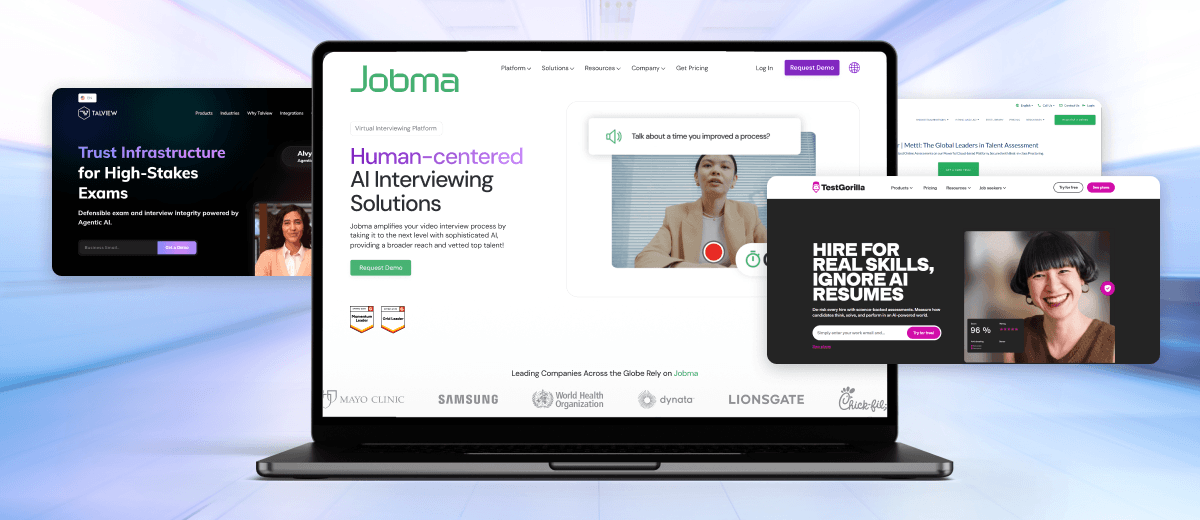
Top three pre-employment assessment platforms:
1. Jobma
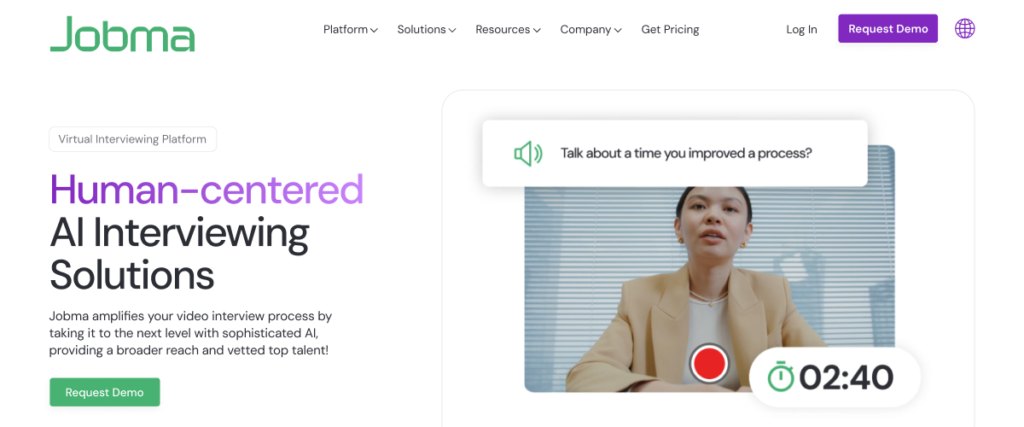
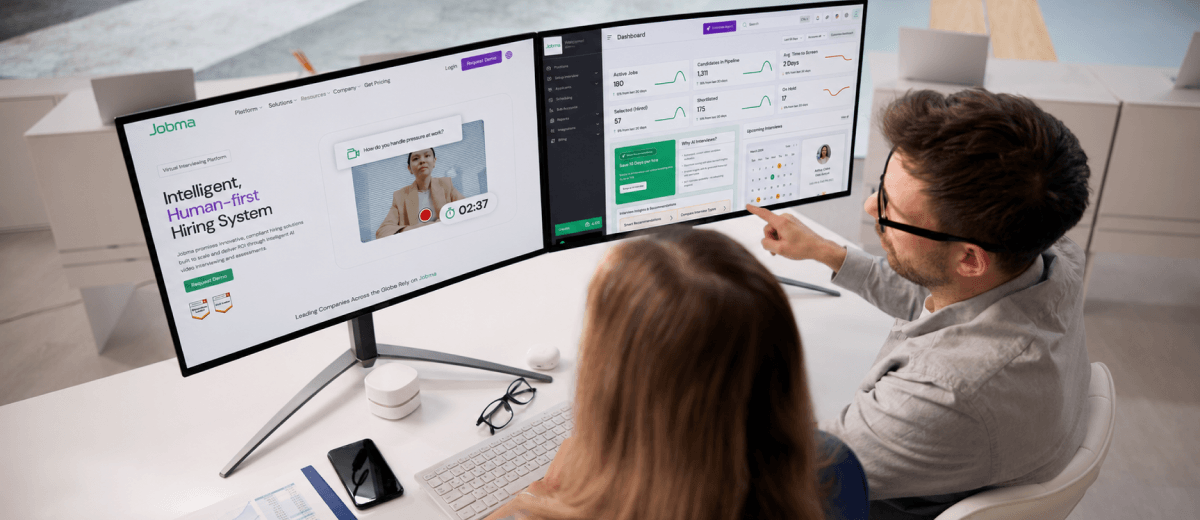
Jobma combines role-based assessments with structured video interviewing, allowing you to evaluate candidates throughout the hiring process.
You can customize skills and role-based assessments with video recordings, multiple-choice questions, written responses, audio recordings, coding challenges, document upload tasks, typing tests, game-based questions, job scenario challenges, and more. The platform includes AI proctoring and monitoring, score recommendations for objective questions, and AI-generated transcripts and summaries to streamline evaluation and maintain assessment integrity.
Recruiters can evaluate technical ability, communication skills, and problem-solving abilities through skill assessments and automate later-stage interviews within one platform.
Best suited for: Organizations looking for a strong video interviewing and assessment platform that supports structured hiring, AI-powered automation, and enterprise-scale recruitment.
2. TestGorilla
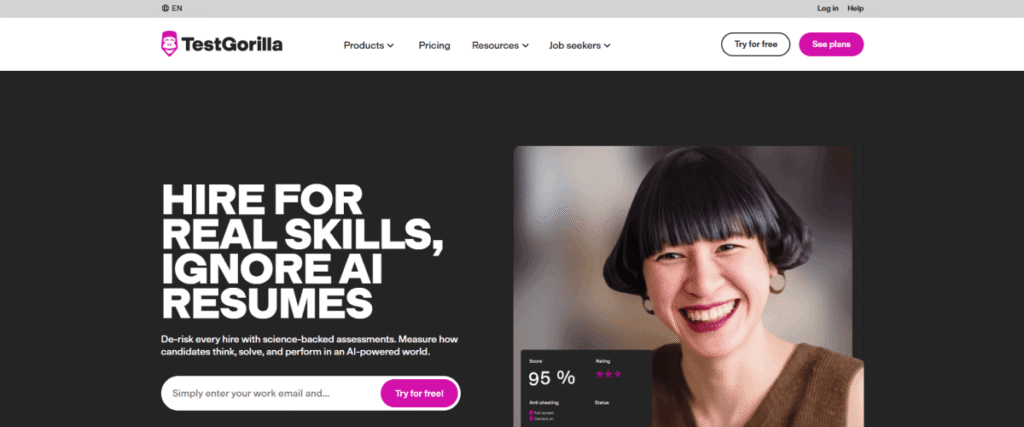
TestGorilla focuses on helping organizations screen candidates early in the hiring process through an extensive library of ready-to-use assessments.
The platform offers tests covering cognitive ability, personality, language proficiency, software skills, programming, situational judgment, and role-specific competencies. Employers can combine multiple assessments into customized hiring workflows and compare candidates using standardized scoring.
Best suited for: Companies that want a broad catalog of validated assessments for early-stage candidate screening.
3. Mettl
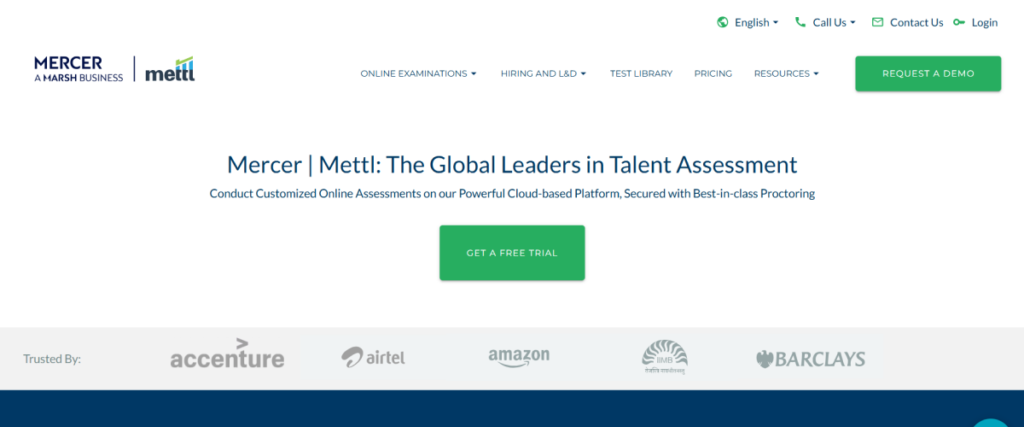
Mercer’s Mettl provides assessments designed for recruitment, certification, workforce development, and large-scale talent evaluation.
It includes aptitude tests, coding assessments, psychometric evaluations, communication assessments, and remote proctoring. Many large enterprises use the platform for campus recruitment, technical hiring, certification programs, and high-volume assessments.
Best suited for: Large enterprises, universities, and organizations conducting secure, large-scale assessments.
Endnotes
The most effective hiring decisions rarely come from a single interview or a single assessment. They come from combining multiple performance indicators to build a well-rounded understanding of each candidate. Pre-employment tests help make more confident and data-backed decisions. Organizations leverage platforms like Jobma to handle their entire hiring lifecycle in one place, from initial screening, skill validation, and one-on-one interactive interviews. The result is more objective hiring operations and better quality candidates that contribute to business growth from day one.