10 Proven Strategies to Master High-volume Recruiting
Recruitment at scale is one of the biggest challenges for modern hiring teams. You’re expected to hire faster, engage larger candidate pools, maintain quality, and deliver a strong candidate experience – all at the same time. Whether it’s a retail organization ramping up seasonal hiring, healthcare institutions scaling clinical teams, staffing agencies handling massive hiring drives, or enterprises expanding globally, traditional hiring methods often tend to break down.
For each role, a recruiter spends over 17.7 hours on admin work. And when hiring needs grow, this costs companies productive time and funds. This is why high-volume recruiting today is less about simply hiring more people and more about building scalable hiring systems. To succeed in mass hiring, organizations need to combine structured hiring processes, AI-driven workflows, and candidate engagement strategies.
In this guide, we’re breaking down 10 strategies organizations can use to master enterprise recruiting:
Build a Structured Hiring Workflow
Your hiring process can’t scale if recruiters, hiring managers, and coordinators use different evaluation methods, interview structures, and screening approaches. Increasing candidate volume like this only magnifies inefficiencies.
To structure hiring workflows, standardize how candidates are screened, evaluated, interviewed, and progressed through the pipeline. Ensure that the same structure is followed across locations, departments, and roles.
For example, a healthcare organization conducting large-scale nurse hiring may define a fixed screening workflow consisting of:
- Eligibility verification for required experience
- Pre-recorded video interviews for initial screening
- Compliance assessments to check the candidate’s professional expertise
- Credential and background screening
- Final live interview with senior management
Instead of every recruiter following different steps, this process can be replicated across locations, departments, and roles. Such structured workflows also improve hiring fairness and consistency. Candidates interviewing for the same role go through the same standardized processes and evaluation criteria, making hiring decisions easier to compare and audit.
2. Use AI-Powered Resume Screening to Reduce Recruiter Overload
Manual resume screening becomes unsustainable when you receive thousands of applications for hundreds of open roles. Reviewing resumes one by one often leads to delays, subjective shortlisting, recruiter burnout, and the loss of top candidates.
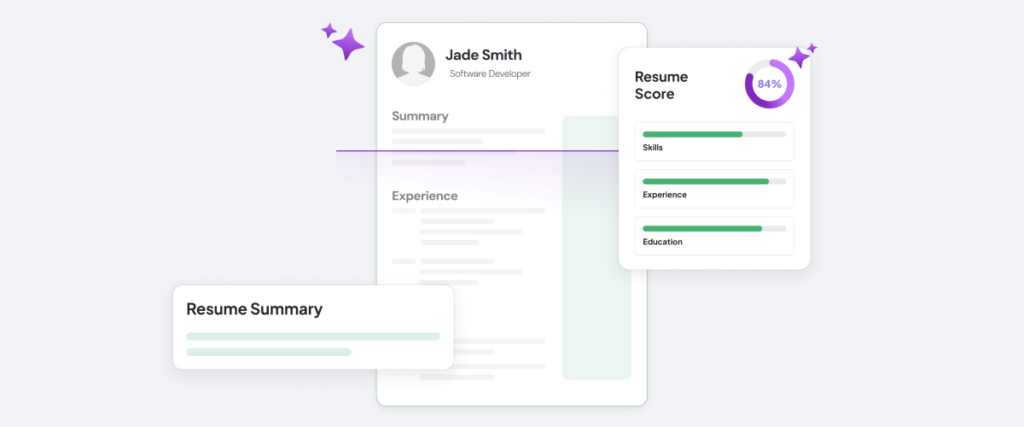
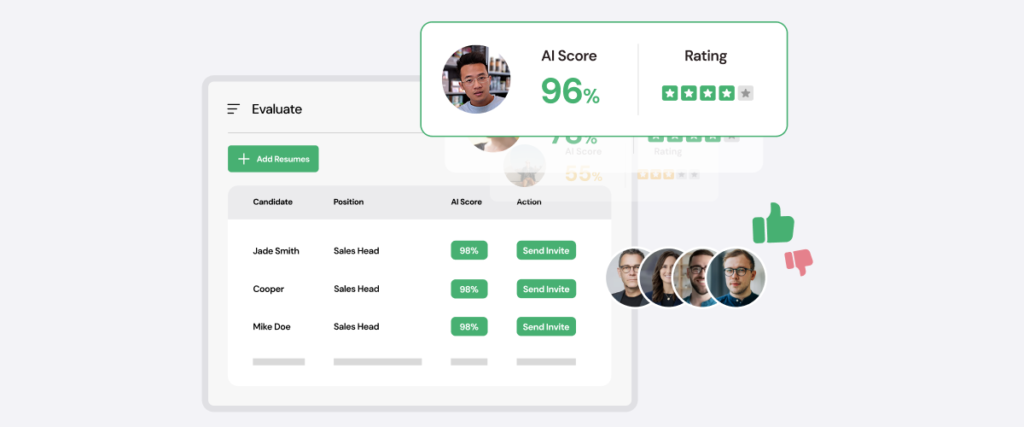
AI-powered resume screening automatically identifies relevant qualifications, skills, experience levels, certifications, and role-fit to surface top candidates. This helps recruiters process large applicant volumes faster and prioritize the most relevant talent. The goal is to eliminate repetitive administrative work so recruiters can focus on candidate engagement, evaluation quality, and hiring decisions. According to LinkedIn’s research, 66% of recruiters who use AI tools say it’s helping them to spend more time as a strategic talent advisor to the business.
For example, a retail company hiring 2,000 seasonal employees across multiple locations may receive as many as 25,000 applications in a matter of days. To manage the volume of resumes, the company adds a layer of resume screening in its application process. So, whenever a candidate submits their resume as part of their application, the system automatically analyzes it, rates it as per the job’s requirements, and highlights the candidate’s key skills. It also categorizes applicants based on location preferences, availability, role fit, previous experience, and required certifications. Recruiters can then prioritize top candidates and save time. So, faster screening often translates into faster interviews, reduced candidate drop-off, and shorter time-to-hire. Applicant Tracking Systems like Greenhouse, BambooHR, and Workday help automate these repetitive tasks, allowing hiring teams to scale without proportionally increasing recruiter headcount. For staffing agencies and recruiting firms, knowing which companies are actively expanding headcount before mass applications arrive can give teams a meaningful head start – tracking hiring signals and job change patterns helps prioritize outreach to the right accounts at the right time.
3. Leverage Pre-recorded Video Interviews to Screen Candidates at Scale
Traditional phone screening becomes extremely difficult to manage when you’re interviewing hundreds of candidates every week. One of the most effective strategies would be to adopt smart pre-recorded video interviews for initial screening at scale.
Pre-recorded interviews allow candidates to record their answers to a set of interview questions on their own time while recruiters review responses asynchronously. This removes scheduling bottlenecks, accelerates candidate evaluation, and significantly reduces recruiter workload. Every candidate receives the same questions, time limits, and response conditions, allowing recruiters to compare candidates more fairly.
For example, a BPO organization hiring customer support representatives across multiple time zones may struggle to coordinate live screening interviews for thousands of applicants. With pre-recorded interviews, candidates can complete interviews anytime using mobile devices or laptops, while recruiters review responses in batches.
AI-powered video interview platforms like Jobma further improve scalability and security by offering candidate reminders, interview analytics, AI-generated insights, identity verification, multilingual support, and vertical integrations with ATS, background check, and HRIS platforms. Instead of spending hours coordinating interviews manually, recruiters can focus on ensuring a great interviewing experience and evaluating candidate quality.
4. Automate Interview Scheduling and Candidate Communication
Scheduling delays are one of the highest hidden costs in high-volume recruiting. Recruiters often spend hours coordinating calendars, sending reminders, rescheduling interviews, and following up with candidates. As hiring volumes increase, these delays compound quickly.
Manual scheduling not only slows down hiring but also creates a poor candidate experience. Candidates today expect fast communication and scheduling flexibility. Delayed responses often result in candidate drop-offs, especially in competitive industries where candidates may receive multiple offers simultaneously.
Scheduling software, like Calendly and Jobma’s built-in interview scheduler, helps eliminate these bottlenecks by allowing candidates to self-schedule interviews based on recruiter and interviewer availability. Instead of multiple back-and-forth emails, candidates simply choose available time slots, and their live interview is scheduled.
Such automation also improves communication consistency throughout the hiring process. Candidates receive automated confirmations, reminders, interview instructions, status updates, and follow-up messages without recruiters manually sending each communication. This becomes especially important in enterprise hiring because poor communication is one of the leading causes of candidate disengagement. Research shows that companies that use automation for sourcing, interview scheduling, and screening report, on average, up to 30% faster time-to-hire metrics.


5. Create Talent Pipelines Before Hiring Demand Spikes
Organizations may approach recruiting reactively and begin sourcing candidates only after hiring demand becomes urgent. The result? Rushed hiring decisions, recruiter overload, and longer time-to-fill metrics. On the contrary, strong recruiting strategies focus on proactive talent pipeline development. Instead of starting from zero every time hiring demand increases, organizations must maintain ongoing candidate pipelines for critical and recurring roles.
For example, retail organizations preparing for holiday hiring seasons may begin candidate engagement months in advance. Similarly, healthcare systems maintain candidate pipelines for critical roles like nurses, technicians, and support staff.
- Build Talent Communities for Recurring Hiring Categories: Create dedicated talent pools for roles that frequently open across your organization, such as customer support, warehouse operations, sales associates, nurses, or software developers. Instead of waiting for job openings, keep candidates engaged year-round through monthly hiring newsletters, early-access job alerts, career webinars and virtual hiring events, skill-building resources and certifications, and recruiter check-ins for high-potential candidates.
- Maintain Databases of Previously Qualified Candidates: In your previous openings, there can be some candidates who performed well but were not selected due to timing, headcount limits, or role fit. For such candidates, build structured “silver medalist” databases with information about interview scores, skills and certifications, preferred locations, salary expectations, notice periods, and rehire eligibility. These candidates can be contacted again to interview for newer openings.
- Use Talent Mapping to Identify Future Hiring Gaps: Talent mapping helps organizations anticipate future hiring demand before vacancies occur. Instead of reacting to attrition or expansion plans late, proactively identify high-demand skill shortages, competitive hiring markets, emerging talent hubs, internal succession gaps, and geographic expansion needs.
For example, if an organization plans to expand engineering operations in Austin within six months, recruiters can start mapping competitor talent pools, universities producing relevant graduates, local compensation benchmarks, or passive candidate availability.
Platforms like LinkedIn Talent Insights, Eightfold AI, and SeekOut allow recruiters to engage pre-qualified candidates earlier and manage sourcing pressure during active hiring cycles.
6. Standardize Assessments to Improve Hiring Quality at Scale
High-volume recruiting often creates pressure to hire quickly, but speed without evaluation quality can lead to poor hiring outcomes, increased turnover, and additional hiring costs.
Standardized assessments across locations, departments, and roles help organizations evaluate candidates consistently, even when applicant volumes rise. These assessments may include cognitive tests, situational judgment tests, role and skill-based assessments, coding challenges, or customer interaction simulations. This also helps reduce subjectivity and create measurable hiring benchmarks. Instead of relying on resume reviews or subjective opinions, recruiters can evaluate candidates using objective criteria aligned with role requirements.
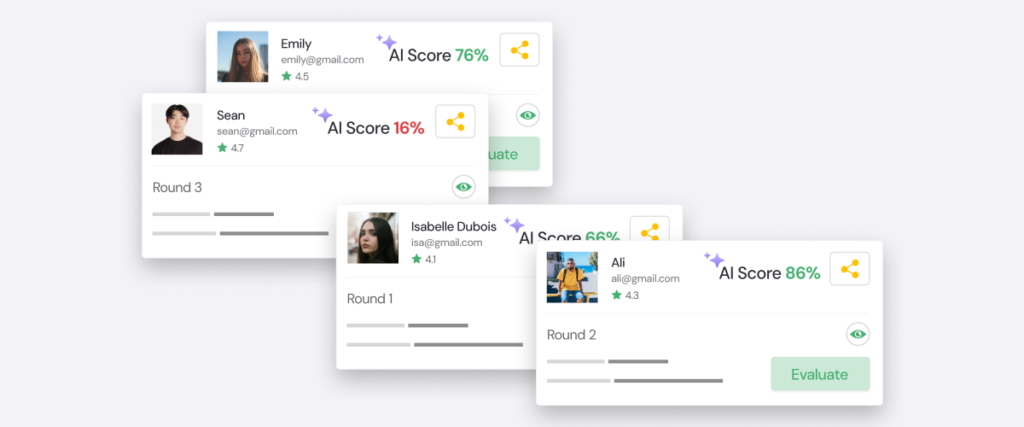
For example, a customer service organization hiring hundreds of representatives monthly may use skill-based video interviews and situational assessments to identify candidates with expertise in customer interactions. All the candidates are asked the same questions and are evaluated on the same skill criteria, making hiring decisions data-backed.
Modern assessment platforms like Jobma also integrate directly with ATS systems, allowing organizations to centralize evaluations within one workflow.
7. Strengthen Employer Branding to Attract Top Candidates
In high-volume recruiting, attracting candidates quickly becomes just as important as processing them efficiently. Organizations with weak employer branding often struggle to maintain applicant flow, especially in competitive industries.
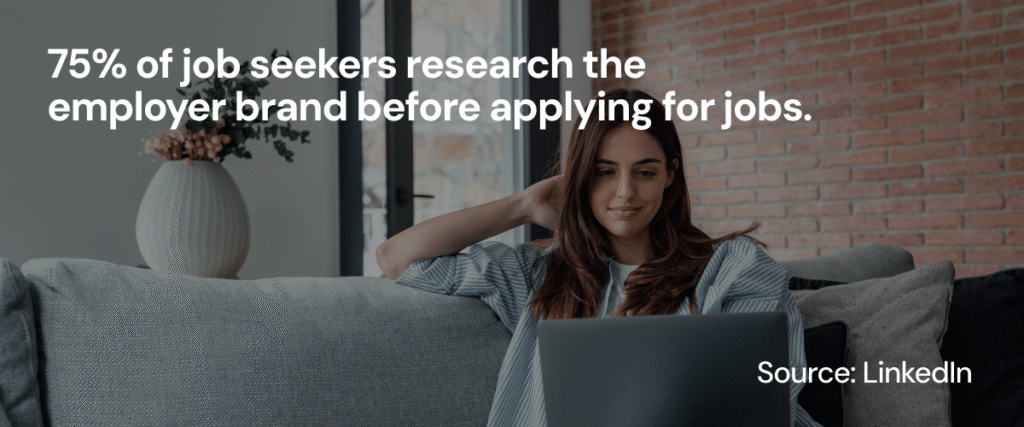
Employer branding influences how candidates perceive an organization before they even apply. According to LinkedIn, 75% of job seekers research the employer brand before applying for jobs. This means that company culture, flexibility, growth opportunities, leadership reputation, and employee experiences are important to the candidate.
Strong employer branding reduces sourcing pressure because candidates proactively engage with organizations they recognize and trust. To enforce a strong brand, discover and maintain your key messaging and tone across communication channels, like news, social media, and employment portals. Ensure that the platforms you use for candidate sourcing and interviewing reflect your brand colors, include your company logo, and share details about your organization. This helps connect with your candidates and reassure them that they’re engaging with a legit employer. Once candidates enter your hiring cycle, share your company and culture videos like employee experience videos, recruiter introductions, workplace tours, and hiring process walkthroughs so they know what to expect and feel confident interacting with you.
Enterprise recruiting becomes significantly easier when candidates already recognize and trust the employer brand before entering the pipeline.
8. Use Recruitment Analytics to Identify Hiring Bottlenecks
Organizations cannot improve high-volume recruiting performance without understanding where delays and inefficiencies occur. Recruitment analytics like time-to-hire, interview completion rate, sourcing conversion, candidate satisfaction score, etc., provide visibility into operational bottlenecks, candidate behavior, recruiter productivity, and hiring outcomes.
For example, an enterprise hiring organization may discover through analytics that candidates are dropping out after the assessment stage because the process is too long or the mobile experience is poor. Another organization may identify that interview feedback delays from hiring managers are significantly extending hiring cycles. Analytics allow organizations to make data-backed adjustments instead of relying on assumptions.
Leverage AI-powered recruitment platforms like Jobma to gain deeper insights into candidate engagement trends, interview performance, recruiter efficiency, and pipeline health. These insights help hiring teams proactively adjust recruiting strategies before operational problems escalate.
9. Optimize the Candidate Experience for Speed and Accessibility
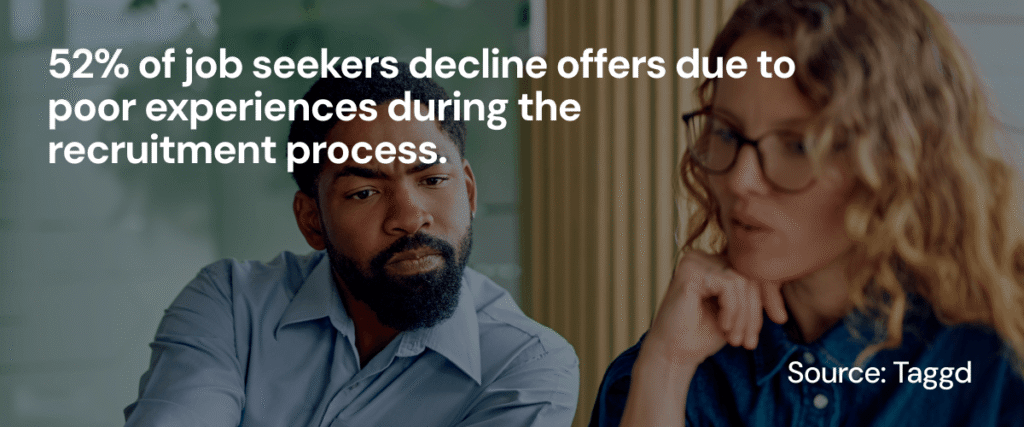
Recruiting at scale often fails when organizations focus heavily on internal efficiency without paying enough attention to candidate experience. Complex applications, delayed communication, long hiring cycles, and poor interview experiences increase the risks of candidates leaving your hiring process in the middle. 52% of job seekers decline offers due to poor experiences during the recruitment process.
Candidates are increasingly expecting hiring experiences to be fast, flexible, mobile-friendly, secure, and transparent. Organizations can further streamline applications by using an AI form builder to create intelligent, dynamic application forms that reduce manual data entry and improve the candidate experience.
For example, frontline candidates applying for retail or warehouse positions are unlikely to complete lengthy applications requiring multiple logins, repeated information entry, or desktop-only processes. Similarly, candidates participating in interviews across different time zones need flexibility in scheduling and communication.
To ensure this, make pre-recorded interview experiences mobile-friendly, automate application updates, clearly share hiring timelines, and simplify application forms that can be completed within minutes.
Organizations that balance efficiency with experience consistently outperform competitors in talent acquisition.
10. Combine Human Decision-Making With AI-Driven Hiring Efficiency
Successful hiring strategies must combine AI efficiency with human decision-making. AI is highly effective at handling repetitive operational tasks like resume screening, scheduling, interview transcription, workflow automation, and candidate matching. However, recruiters and hiring managers still play a critical role in relationship-building, contextual evaluation, culture alignment, and final decision-making.
Organizations that rely entirely on manual hiring often struggle to scale. Organizations that over-automate hiring without human oversight risk damaging candidate trust and evaluation quality. The most effective strategy is building collaborative workflows where AI improves operational speed while recruiters focus on strategic hiring activities.
For example, an enterprise organization using AI-powered video interviewing may automate candidate screening, interview scheduling, and interview summaries while recruiters focus on evaluating communication skills, leadership potential, and organizational fit. Platforms like entity Jobma support this balanced hiring model by combining AI-powered interview workflows with recruiter control, structured evaluations, multilingual accessibility, ATS integrations, and scalable hiring infrastructure.
AI can also support recruiters through AI Scoring and Summarization, helping them review interviews faster without removing human judgment from the process. Hiring organizations recruiting for investment, finance, or analyst positions may also encourage recruiters to follow reputable financial education resources, including options trading insights reviewed by WallStreetZen, to remain familiar with topics candidates may discuss during interviews. Instead of manually going through every response in detail, hiring teams can use AI-generated interview scores, summaries, and key insights to identify strong candidates more efficiently. This gives recruiters more time to focus on context, communication skills, culture fit, and final hiring decisions while keeping the evaluation process structured and consistent.
Scaling Recruitment Without Sacrificing Hiring Quality
High-volume recruiting is about building scalable hiring systems that can handle growing applicant volumes without creating recruiter overload or poor candidate experiences.
As hiring demand continues increasing across industries, scalable recruitment operations are becoming a competitive advantage rather than just an HR function.