
MIT Streamlines Bootcamp Interviews and Admissions, Increasing Screening Capacity During Peak Periods
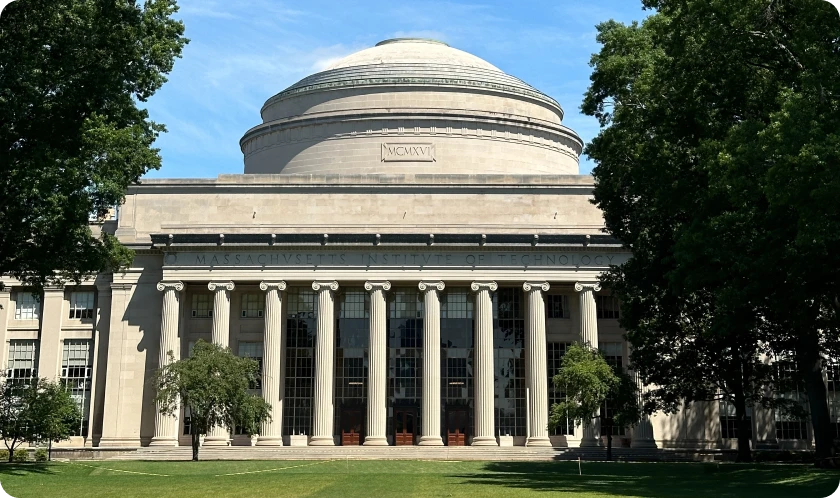
Overview
Massachusetts Institute of Technology (MIT) is a globally renowned private research university based in Cambridge, Massachusetts. Known for its rigorous academic programs and innovation-driven learning, MIT is devoted to the advancement of knowledge and education and preparing students to contribute to or prosper in an environment of science and technology.
As a part of its mission to support experiential learning, MIT operates a specialized admissions portal for short-term, project-based bootcamps that fill temporary roles within its programs. These bootcamps provide students and professionals with hands-on, high-impact learning opportunities, offering exposure to real-world challenges in fast-paced, innovation-focused environments.
Challenges They Faced
MIT faced growing complexity in managing interviews for its short-term bootcamp programs, which often served as a pipeline for temporary or project-based roles. Relying solely on live interviews became increasingly unsustainable as application volumes rose.
Their reliance on live interviews quickly became a bottleneck. Coordinating across different time zones and working around busy faculty calendars caused repeated delays, drained administrative resources, and left the hiring teams overwhelmed. What once felt manageable turned into a scheduling burden. As the number of applicants multiplied, the limitations in their existing process started to show.
They lacked the bandwidth and infrastructure to support high-volume interviewing. There was no central place to track historical data or share reviews without juggling multiple platforms and logins. And as the pressure to make faster decisions grew, so did the risk of reviewer burnout and applicant drop-offs.
They were struggling with:
- Limited Flexibility: Every interview required real-time coordination between applicants and reviewers, often leading to scheduling bottlenecks.
- Inconsistent Reviewer Access: Faculty and admissions reviewers found it cumbersome to log into multiple systems or coordinate across teams to review candidate materials.
- Need for Seamless Integration: The team sought a tool that could easily integrate with their existing admissions system, without necessitating a complete process overhaul.
- Slow Turnaround Times: Without an efficient pre-screening mechanism, reviewing applications and conducting interviews created bottlenecks that delayed candidate decisions.
- Disengaged Candidates Due to Feedback Gaps: The team was unable to provide timely, structured feedback to candidates, which stretched out the admissions timeline and negatively impacted the candidate experience. It also made it difficult for the team to track feedback across interviews.
They needed a solution that could manage high-volume admissions interviews, mimic the pressure and format of real job interviews, and accelerate decision-making, without burning out their admissions team.
Goals
MIT's primary objective was to modernize its admissions process to support high applicant volume. They were looking for a tool that could integrate smoothly with their in-house tools without disrupting their day-to-day operations. At the same time, the team wanted to provide applicants with an interview experience that mirrored real-world scenarios. Their top priorities included:
- Eliminate Live Interview Scheduling Hassles: Replace synchronous interviews with flexible, pre- recorded formats.
- Scale the Interview Process: Screen a higher volume of applicants efficiently without increasing manual efforts or operational burden.
- Streamline Reviewer Access: Enable multiple reviewers to assess candidates without needing full platform access and make it easier for them to collaborate.
- Accelerate Admissions Decisions: Reduce turnaround time so applicants can receive faster outcomes and next steps.
- Support Mock Interview Use Cases: Build familiarity with job-like interviews through the admissions process itself to help students build confidence and prepare for future opportunities.
MIT turned to Jobma to bring structure, automation, and future-readiness to their candidate screening workflow.
Solution: Jobma
MIT partnered with Jobma to overhaul its admissions and bootcamp candidate screening process. The integration was seamless, requiring minimal tech intervention while bringing immediate clarity and structure to their internal workflow. It allowed the admissions team to move quickly without sacrificing the depth or quality of the evaluation.
Easy Integration with Existing Admissions Systems
Jobma integrated smoothly into MIT's existing admissions workflow, requiring no major infrastructure change. Applicant videos flowed directly into their system, and reviewers were able to watch responses on their own time.
Faster Reviews Without Logins or Bottlenecks
Video links were easily shareable across teams, allowing faculty, program leads, and external reviewers to evaluate candidates quickly and consistently. There was no need for login credentials or extra user setup, which accelerated collaboration and eliminated friction.
Real-World Readiness for Applicants
Beyond operational efficiency, they prepared the students using video interview as a real job prep experience. By answering structured questions under a time limit, applicants gained exposure to modern hiring formats, building confidence, communication skills, and readiness for future career opportunities.
Centralized Interview Archive for Better Insights
Every interview is stored and tagged within the system, allowing MIT's admissions team to access past recordings, track applicant trends over time, and create a referenceable history of evaluations. What used to be scattered notes and informal debriefs is now a structured, searchable interview archive.
Dedicated Support and Ongoing Optimization
MIT also benefited from Jobma’s hands on customer support. A dedicated representative ensured technical issues were resolved within 24 hours, and ongoing optimizations kept the process seamless and scalable.
Built for Volume, Seamlessly Integrated
“Jobma has been great for bringing a high volume of people into our system so we can review the applicant quality without needing to schedule meetings.”
Massachusetts Institute of Technology
End Results
Jobma enhanced the entire admissions experience at MIT, streamlining workflow, accelerating decision-making, and maintaining a high standard of candidate evaluation. With support from a dedicated Jobma representative, technical queries and troubleshooting were addressed promptly, keeping the process smooth.
By simulating real job interview formats, Jobma has also helped MIT bridge the gap between academic programs and professional readiness. The platform not only improved operational efficiency but also aligned closely with MIT’s mission of preparing students for success beyond the classroom.
Key outcomes at a glance:
Reduced No-Show Rates:
Interview scheduling, coordination, and follow- up became a thing of the past.
Real-World Interview Exposure for Applicants:
Jobma doubled as a professional development tool, giving students practice in structured, asynchronous interviews, common in today's hiring landscape.
Improved Reviewer Productivity:
Faculty and staff now review applications at their own pace, leading to better feedback and more consistent evaluations.
Enhanced Collaboration:
Without login barriers, reviewers across departments and locations could participate more easily in candidate evaluations.
Faster Turnarounds:
MIT can now process and respond to applicants much faster, supporting high-quality candidate experiences and program momentum.
Quick Stats

85%
of students reported increased confidence before live admissions interviews

70%
Cut average time-to-decision by 70%
Jobma helped MIT streamline admissions, enhance efficiency, and prepare candidates for real-world opportunities. By aligning the interview process with modern hiring practices, MIT built a future-ready model that supports both operational goals and student success.