


Ideas for Team-Building Activities and Games in the Office
Struggling with low engagement or disconnected employees? You’re not alone. Many organizations are seeing a steady decline in day-to-day connection, collaboration, and morale. According to Gallup, only 21% of employees worldwide are engaged at work, leaving the majority either disengaged or actively disconnected from their teams.
The impact of disengagement is significant:
- Employees who feel connected to their team are more likely to stay with their organization, reducing turnover and hiring costs.
- Teams that collaborate effectively also report higher productivity and lower burnout.
To boost engagement, team-building activities can make a real difference. They are known to transform the workplace relationship dynamics.
What are Team-Building Activities?
Team-building activities are fun yet structured ways to help people connect outside their day-to-day work. Instead of only interacting through tasks, deadlines, and meetings, employees get a chance to collaborate, talk, and experience something together.
The goal isn’t just “fun.” These shared moments help build trust, improve communication, and make working together easier over time.
That said, not everyone loves traditional team-building. The difference usually comes down to how relevant and comfortable the activity feels. When the format fits the team, and participation doesn’t feel forced, the impact is much stronger.
Benefits of Hosting Team-Building Activities
Team-building activities have a measurable impact on engagement, performance, and retention.
Improves Employee Engagement: Engaged teams perform better. Gallup reports that highly engaged teams see 23% higher profitability and 18% higher sales productivity. Regular interactions help employees feel connected to their work and the people around them.
Strengthen Communication: Activities that require collaboration encourage people to listen, share ideas, and solve problems together. Over time, this reduces misunderstandings and makes everyday work smoother.
Builds Trust & Psychological Safety: Trust develops when team members see how others handle challenges, support one another, and contribute fairly. Team-building exercises create safe opportunities for this trust to grow. Employees who feel psychologically safe are more likely to share ideas, ask questions, and contribute to innovation.
Strengthen Collaboration: Many activities highlight different strengths and working styles. This helps teams understand how to work together more effectively, especially across roles or departments.
Reduces Burnout and Workplace Stress: Gallup reports that employees who feel connected to their team experience significantly lower levels of stress and burnout. Social support at work is one of the strongest predictors of employee well-being.
Improves Retention: Organizations with engaged employees see 78% less absenteeism and 51% lower turnover. Team-building activities reinforce culture, strengthen relationships, and create a more positive work environment.
What this Guide Covers
In this guide, we’ve compiled 25+ team-building activities, grouped by format and time commitment. You’ll find quick icebreakers for meetings, creative in-office games, virtual options for remote teams, and longer activities for deeper collaboration.
The goal is simple: practical ideas you can actually run, without complicated planning or large budgets.
List of Team-Building Activities
Quick 5-Min / Ice-Breaker Activities
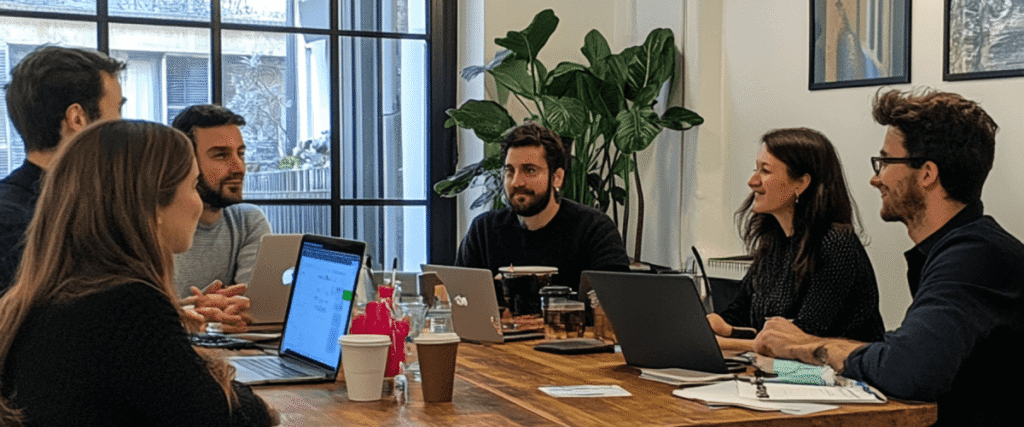
1. Two Truths and a Lie
Time: 5 minutes | Team size: 3-15
How to play: Each participant shares two true statements and one false statement about themselves. The rest of the group votes on which one they think is the lie. This activity helps team members learn fun, memorable facts about each other and works well for new or cross-functional teams.
2. One-Word Check-In
Time: 3-5 minutes | Team size: Any
How to play: Ask each team member to describe their current mood, energy level, or workload using just one word. Move around the group without overthinking or long explanations.
This takes very little time but gives leaders a real-time sense of how the room (or Zoom) is feeling.
3. Emoji Mood Round
Time: 3-5 minutes | Team size: Any
How to play: Participants drop an emoji in the chat or describe one out loud that captures how their week is going. Invite a few people to share the story behind their choice if they’d like.
It’s especially useful for remote teams and keeps check-ins casual without putting anyone on the spot.
4. Rapid-Fire Questions
Time: 5 minutes | Team size: 5-20
How to play: The facilitator throws out quick preference questions, such as:
- Coffee or tea?
- Cats or dogs?
- Early bird or night owl?
- Work from home or office?
Participants answer instinctively, without debating or overexplaining. The pace keeps the energy up and helps people spot unexpected similarities.
5. Would You Rather
Time: 10-15 minutes | Team size: Any
How to play: Present fun or slightly absurd choices like:
- Attend meetings all day or reply to emails all day?
- Be in a zombie apocalypse or an alien invasion?
- Fly or be invisible?
Participants vote using polls, reactions, or raised hands, followed by short commentary from volunteers. It’s a simple way to spark conversation, and it usually brings out some strong opinions.
6. Desert Island
Time: 10-15 minutes | Team size: Any
How to play: Ask each person to share three items they would bring if stranded on a desert island and explain their reasoning. Encourage creative or practical answers; both make it interesting.
You’ll quickly see who thinks strategically, who thinks emotionally, and who just wants snacks.
7. 60-Second Talent Show
Time: 10-15 minutes | Team size: Any
How to play: Invite one or two team members to share a skill, hobby, or unusual ability in under one minute. Rotate volunteers in future meetings so everyone gets a chance over time. It’s a relaxed way to highlight personalities.
Fun Office Team-Building Games (In-Person)

8. Office Trivia
Time: 20-30 minutes | Team size: 5-30
How to play: Create trivia questions based on company history, industry knowledge, workplace moments, or fun team facts (like hobbies, milestones, or inside traditions). Split participants into small groups and keep score as you go.
It’s competitive without being intense and a great way to reinforce shared experiences while getting people talking and working together.
9. Collaborative Painting or Sketching
Time: 20-30 minutes | Team size: Pairs or small groups
How to play: Give everyone a sheet of paper or canvas and a simple theme to start with. After a few minutes, participants pass their artwork to the next person, who adds to it. Continue rotating for several rounds, then reveal the final pieces.
The results are usually unexpected (and entertaining), and the process pushes people to build on each other’s ideas rather than control the outcome.
10. Human Bingo
Time: 15-20 minutes | Team size: 10-40
How to play: Prepare bingo cards with prompts such as:
- Has worked here for more than 5 years
- Speaks more than two languages
- Has a pet snake
- Loves hiking
- Is into fitness
Participants move around the room to find coworkers who match each statement and fill in their cards. The first person to complete a row or the entire card wins.
This works especially well for larger groups, helping people connect with colleagues they don’t normally interact with.

11. Office Scavenger Hunt (Hybrid-Friendly)
Time: 45-90 minutes | Team size: Small groups
How to play: Put together a list of items to find or challenges to complete – for example: take a team selfie, locate something in a specific color, recreate a famous pose, or solve a quick clue. Teams race to complete as many tasks as possible within the time limit.
For hybrid teams, remote participants can submit photos or complete digital challenges. It’s an easy way to break routine and get people collaborating with a shared goal.
12. Shark Tank Pitch
Time: 30-45 minutes | Team size: Small groups
How to play: Divide participants into teams and give them time to come up with a fictional product, service, or business idea. Each team prepares a short pitch and presents it to a panel of judges or the full group.
Winners can be chosen based on creativity, practicality, or presentation style. Beyond the fun, this activity gets people thinking quickly, working as a team, and presenting ideas with confidence.
Creative Problem-Solving Activities
13. Murder Mystery
Time: 60-90 minutes | Team size: 6-20
How to play: Turn this into a fully themed experience where everyone plays a character in a fictional crime story. For example, in a Movie Murder Mystery, the team becomes directors, actors, and crew celebrating a big premiere, until the director is suddenly found dead. Each participant receives a character brief, secret motives, and clues that unfold throughout the game.
As the story progresses, teams question each other, compare evidence, and piece together what really happened. The immersive setup naturally pulls people in and encourages strategic thinking, observation, and collaboration.
14. Puzzle Relay
Time: 20 minutes | Team size: Teams
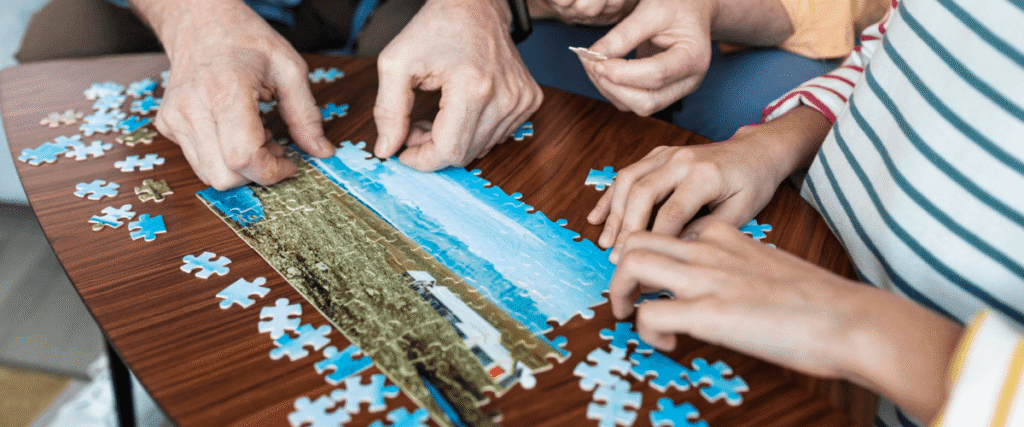
How to play: Divide participants into teams and give each group a puzzle. Instead of solving it all at once, teammates rotate in short intervals, each person adds progress before handing it off to the next.
Because no one sees the full picture the entire time, teams have to communicate clearly and trust each other’s decisions. (Depending on the format, you may need to purchase puzzle kits or materials.)
15. Reverse Brainstorming
Time: 20 minutes | Team size: Any
How to play: Present a real challenge the team is facing, then flip it. Instead of asking how to fix the issue, ask: “How could we make this problem worse?”
Once the “worst possible ideas” are listed, reverse them into practical solutions. The shift in perspective often unlocks insights that traditional brainstorming misses.
16. Build a Bridge
Time: 30-45 minutes | Team size: Small groups
How to play: Provide limited materials: paper, tape, straws, or string and challenge teams to build a bridge that can support a specific amount of weight. Set a time limit and test each structure at the end.
The constraints force teams to plan carefully, divide responsibilities, and adapt quickly when designs don’t go as expected.
17. Design a New Logo
Time: 20-30 minutes | Team size: Groups
How to play: Ask teams to create a new logo for the company, a fictional brand, or even their own department. Give them a short brief to guide direction, then have each group present their design and explain the thinking behind it.
You’ll see different interpretations of the same concept, which often sparks interesting conversations about perception, branding, and creativity.
Outdoor & Hybrid Games
18. Escape Room Challenge
Time: 45-60 minutes | Team size: 4-10
How to play: Instead of a standard booking, turn this into a team competition. Give each group the same storyline and start time, then track who solves the final puzzle first or progresses the furthest before the clock runs out. If you’re running it in-office or hybrid, create puzzle stations (codes, riddles, locked boxes, or digital clues) that teams must solve sequentially. Add a rule that teams can request only two hints to keep the pressure and collaboration high.
Note: This will require monetary investment.
19. Three-legged Race
Time: 30 minutes | Team Size: Any
How to play: A classic outdoor fun game. Pair employees and tie one leg from each partner together at the ankle. Instead of a single sprint, set up a relay course with short segments where pairs must coordinate their pace, switch partners at checkpoints, and complete small challenges (like carrying a ball or navigating cones) before tagging the next team. This adds strategy and communication, not just speed.
20. Photo Quest
Time: 30 minutes | Team Size: Any
How to play: Give each participant or team a color, theme, or challenge list (e.g., “something that represents teamwork,” “a geometric shape,” or “a moment of kindness”). Players must capture original photos within the office, outdoors, or at their location if remote. All entries are shared in a group chat or channel before the deadline, and the team votes on categories like Most Creative, Funniest, or Best Interpretation.
Modern & Trend-Based Team-Building Activities

21. AI Prompt Challenge
Time: 10-15 minutes | Team Size: Any
How to play: Give each team the same theme: for example, “A day in the life of our customers” or “If our company were a movie.” Teams then craft prompts and generate outputs using an AI tool. The result could be a short story, image concept, mock campaign, or even a fictional product pitch.
To make it more interesting, limit the number of prompts they can test. That way, teams have to think carefully about how they phrase their ideas instead of relying on trial and error. Once time is up, share the final outputs and vote on categories like Most Creative, Most Practical, or Funniest.
It’s fast-paced, current, and usually sparks good conversations about how AI can (and can’t) support creative work.
22. Meme Creation Contest
Time: 10-15 minutes | Team Size: Any
How to play: Pick a relatable workplace theme, such as deadline, pressure, Monday energy, team meetings, or remote work life, and ask participants to create an original meme using simple templates or free tools.
Each person or team submits one entry within the time limit. Display the memes anonymously and let the group vote on lighthearted categories such as Most Relatable, Funniest, or Most Accurate.
This one tends to bring out everyone’s sense of humor, and sometimes the memes become inside jokes long after the activity ends.
Virtual Team Building Activities

23. Online Trivia Night
Time: 20-30 minutes | Team size: 5-50
How to play: Run a live trivia session using a quiz tool or a simple presentation. Mix up the categories to keep things engaging: pop culture, general knowledge, company history, industry trends, or even fun facts about the team.
Break participants into smaller groups and keep the rounds short and fast-paced. Teams can submit answers through chat, polls, or a shared form. After each round, share the scores to build a little friendly competition and keep the energy up.
It’s an easy way to bring large remote teams together and add a social break without taking too much time out of the day.
24. Virtual Pictionary
Time: 15-20 minutes | Team size: 4-20
How to play: Divide participants into teams and use a shared whiteboard or online drawing tool. One person is given a word and has to draw it while their team guesses within the time limit.
Switch the artist each round and keep track of points to keep things moving. Choose themes that fit your team: workplace terms, movies, everyday objects, or even inside jokes if the group knows each other well.
The imperfect drawings, quick guesses, and time pressure usually lead to a lot of laughs, making this a simple but effective way to loosen up a virtual meeting.
Trust & Connection Activities

25. Appreciation Circle
Time: 10-15 minutes | Team size: 4-20
How to play: Ask team members to take turns appreciating someone in the group for a specific action, attitude, or recent support. The more specific the feedback, the more meaningful it feels (for example, “Thanks for jumping in during the client call last week”).
Make sure everyone gets a chance to both give and receive appreciation. This simple activity helps people feel valued and reinforces a culture where contributions don’t go unnoticed.
26. Strengths Spotlight
Time: 15-20 minutes | Team size: Any
How to play: Invite each person to share one strength they bring to the team, along with a recent example of how they’ve used it at work. After they share, teammates can add what they’ve noticed or appreciated about that person’s strengths.
This activity helps individuals feel recognized while giving the team a better understanding of each other’s working styles and capabilities.
27. Team Gratitude Wall
Time: 10-20 minutes (ongoing option) | Team size: Any
How to play: Set up a shared space where team members can post quick thank-you notes, shoutouts, or positive moments. This could be a digital board for remote teams or a physical wall in the office.
Take a few minutes during team meetings to highlight a few messages. Over time, the wall becomes a running collection of wins, support, and everyday moments that reflect the team’s culture.
Large Group Activities

28. Team Quiz Tournament
Time: 45-60 minutes | Team size: 20+ (divide into teams)
How to play: Split the group into smaller teams and run a quiz with a few short rounds instead of one long session. Use a mix of categories – general knowledge, pop culture, company trivia, industry topics, or even fun team-specific questions.
Keep a running scoreboard so the competition feels real. You can also add small twists like a lightning round, a visual round, or a chance for teams to “steal” unanswered questions.
This format works well for larger groups because everyone gets involved. Teams discuss, debate, and make quick decisions together, which naturally builds energy in the room.
29. Hackathon / Innovation Day
Time: Half-day to full day | Team size: 20+ (small cross-functional teams)
How to play: Create small teams with people from different roles or departments and give them a real challenge to work on. It could be improving an internal process, solving a customer problem, or coming up with a new product or feature idea.
Instead of expecting something fully built, focus on ideas and direction. Teams spend the session brainstorming, outlining their approach, and putting together a simple concept or prototype. At the end, each group presents their solution to a panel or the larger team.
Setting time checkpoints helps keep things moving. Many organizations also add light themes or small awards (for example, Most Practical Idea or Most Creative Approach) to keep motivation high.
The biggest benefit is the collaboration. People get to work with colleagues they normally wouldn’t interact with, and that often carries back into day-to-day work.
How to Choose the Right Team-Building Activity for Your Office
Consider what your team actually needs right now. Are you welcoming new hires? Trying to improve communication? Or just looking to bring some energy back into long meetings? The objective should guide your choice.
Then look at the practical details: team size, work setup (remote, hybrid, or in-person), and how much time you can realistically spare. Quick, low-pressure activities work well for regular meetings, while longer sessions make more sense for off-sites or dedicated team days.
One important tip: avoid making participation feel forced. Not everyone is comfortable with high-energy or personal activities.
Final Takeaway
You don’t need a full-day offsite to make a difference. A quick icebreaker at the start of a meeting, a short creative activity once a month, or even a few minutes of recognition can go a long way.
If you’re not sure where to begin, pick one or two activities from this list and try them over the next few weeks. Notice what people respond to, ask for feedback, and adjust.
Track wins through simple post-activity polls on connection levels, and watch retention and collaboration improve as bonds strengthen. Your team deserves these shared moments – invest now for a more unified, energized workplace.