


Talent Mapping Guide 2026: A Smarter Approach to Sourcing
Talent mapping is a strategic process to understand the skills your organization has today, skills it will need in the future, and the plan to close that gap. It combines evaluating your current workforce, identifying missing or scarce capabilities, and building a plan to source or develop the talent required for long-term business goals.
At its core, talent mapping is a continuous planning process where you:
- Review and document the skills and strengths of your current employees
- Pinpoint skill gaps that could impact future growth
- Forecast the roles and capabilities your business will need next
Unlike reactive recruiting or basic candidate sourcing, talent mapping provides a bigger-picture view. It connects workforce planning, skills assessment, succession planning, and hiring strategy into one unified approach. So, it helps ensure that your organization always has future-ready talent.
Talent Mapping Strategies
Effective talent mapping requires structure, consistency, and a clear process. Here are practical strategies for recruiters and HR teams to weave talent mapping into organizational talent management:
1. Define Business Goals and Talent Requirements
Before mapping talent, you need to understand what your business is aiming to accomplish. Start with the company’s long-term vision and business objectives. Utilizing free OKR software can help teams stay aligned without adding costs.
Get alignment from business leadership And you definitely need someone who can bring this skill to his job as well. With the help of an attention to detail test, you can assess the skill easily.
- What markets do you plan to enter?
- What products or services will you launch?
- Do you anticipate high growth over the next 3-5 years?
Use these to determine which roles, technical, leadership, and specialized, will become critical.
Once goals are clear, identify key roles and competencies needed to achieve them. This includes domain skills (e.g., data analytics, compliance, product engineering), operational leadership roles (e.g., fractional COO vs EOS integrator, VP of operations), and soft skills (leadership potential, adaptability, cross-functional collaboration). Then, translate them into talent needs. For example:
- New market entry indicates the need for regional sales talent.
- If you’re planning for a tech expansion, you would need product managers, data engineers, and QA talent to power this expansion.
- For rapid scaling, critical roles to fill would be recruiters, onboarding specialists, and customer support.
When defining talent requirements, organizations should assess whether operational challenges truly require additional hires or if they can be resolved through smarter systems. This comparison of hiring more staff vs automation shows how parcel and mail handling inefficiencies are often better addressed through technology rather than expanding headcount. Having clarity at this stage helps in shaping the talent map around the organization’s strategic trajectory, not just current hiring needs.
2. Build Ideal Profiles and Skill Frameworks for Each Role
For each role, create an “ideal candidate profile.” So, for every future role, determine these requirements:
- Technical skills
- Domain knowledge
- Behavioral skills
- Certifications or compliance requirements
- Experience ranges
- Must-have vs. nice-to-have capabilities

Use inputs from hiring managers and high performers already in the company. Turn those inputs into role scorecards or competency frameworks. Then, store these frameworks in your ATS or talent platform so they can be used whenever needed. This helps standardize frameworks to ensure consistent evaluation across internal and external candidates.
3. Identify Skills That Matter Most
Prioritize skills that are both highly important to your business and difficult to find in the market. This ensures you invest resources where they actually move the needle.
How to apply it:
- Evaluate skills on these simple questions:
- How critical is this skill to business growth?
- How difficult is it to find these skills in the talent market?
- Skills that are critical and hard to hire should trigger proactive pipelines, early sourcing, or internal upskilling plans.
- Skills that are easier to find can be handled reactively.
This segmentation helps you create a talent map focused on the skills most likely to impact growth.
4. Map Internal Talent & Build External Talent Pools
With a clear skill framework and internal inventory, assess which of your current employees are ready or near-ready for future roles. Leverage company databases to centralize employee skills, certifications, and performance data, making it easier to identify internal candidates who match future role requirements. Plan training, mentorship, or mobility for the critical roles first. This nudges internal talent into the “ready now / ready soon” bucket.

For roles or skills not covered internally, build external talent pipelines. This includes passive candidates, professionals who are not actively job-seeking now, but match your future requirements. Maintain relationships through community portals, personal outreach, and strong employer branding.
This dual approach builds a comprehensive talent map: internal mobility + ready talent pipelines.
5. Strengthen Succession and Career Development
Position talent mapping as the backbone of succession planning. For senior roles or niche positions, identify potential successors well in advance, based on mapped competencies and potential evaluated earlier. To ensure this:
- Identify positions where leadership continuity is essential, engineering leads, sales managers, product owners, and operations heads.
- Map internal successors and assess how close they are to being “ready” using structured leadership assessment frameworks.
- Use skill-gap insights to build personalized development plans.
- Track readiness progress over time and update paths as roles evolve.
For smooth internal succession, it’s important to nurture high-potential employees and align career paths to business needs. At the same time, integrating an appointment setter service can help manage discussions and meetings with potential successors efficiently.
6. Make Talent Mapping Continuous and Data-Driven
Treat talent mapping not as a one-time project, but as an ongoing process. As business needs shift, skills evolve, or employees grow, update your talent map regularly.
How to apply it:
- Update the map biannually or quarterly using HRIS, ATS data, skill assessments, and performance insights.
- Track learning progress, new certifications, project histories, and emerging market skill trends.
- Use analytics dashboards to monitor talent readiness, capability gaps, and risk areas.
It helps create a dynamic, always-ready talent map that reflects the real state of your talent pipeline.

Why Talent Mapping is Essential for Recruiters
Reactive hiring isn’t enough in a labor market where skill needs change rapidly, and competition for talent keeps rising. Recruiters and HR teams need a forward-looking approach, and that’s where talent mapping becomes essential.
- Strategic Workforce Planning: Talent mapping helps you understand which roles and skills the business will need months or even years ahead. Instead of waiting for a vacancy to open, teams can start building pipelines early. This makes expansions, restructuring, or new product launches smoother because the organization already know how to fill the talent gaps.
- Filling Skill Gaps & Succession Readiness: By analyzing current capabilities against future needs, talent mapping reveals where skill shortages are emerging. You can then plan hiring, upskilling, or redeployment before these gaps affect operations. It also strengthens succession planning by identifying high-potential employees who can grow into leadership or specialized roles with the right development.
- Faster, More Efficient Hiring: When talent pools are pre-built, and candidate profiles are already evaluated, recruiters avoid starting from zero every time a role opens. This reduces time-to-hire, improves match quality, and lowers hiring costs. Talent mapping gives teams a shortlist-ready view of internal and external candidates who may align with future roles.
- Better Employee Engagement, Retention, and Internal Mobility: Talent mapping highlights employees with untapped skills or growth potential. Giving your employees career growth and professional development opportunities increases engagement and retention. It also enables smarter internal mobility, helping managers move the right people into roles where their skills will be best utilized.
- Competitive Advantage in a Skills-first Economy: As skills evolve faster than job titles, companies that rely on old hiring methods fall behind. Talent mapping allows you to track scarce or emerging skills early, build relationships with niche talent, and stay ahead of competitors. It positions your organization to adapt quickly to market changes or technological shifts.
Overall, talent mapping transforms recruitment from being tactical and reactive to strategic and proactive.
How to Leverage AI for Talent Mapping
The HR industry is undergoing a tech-driven shift. AI and machine learning are elevating talent mapping from manual spreadsheets and gut-feel to data-driven precision. For recruiters using digital interview platforms or sourcing tools, integrating AI into talent mapping offers dramatic advantages.
Here are three essential kinds of tools to use in modern talent mapping, and why they matter.
1. Interview & Candidate Evaluation
AI-powered video interviewing platforms, especially those offering asynchronous or AI-assisted interviews, are a powerful lever in talent mapping. These platforms help you capture consistent, comparable data about how candidates communicate, think, and perform across different roles. Unlike resumes or phone screens, recorded interviews match candidate competencies with role requirements. You can easily reference these profiles later when new roles open or business needs shift. These platforms also streamline screening at scale, allowing hiring teams to evaluate more candidates without sacrificing structure or accuracy.
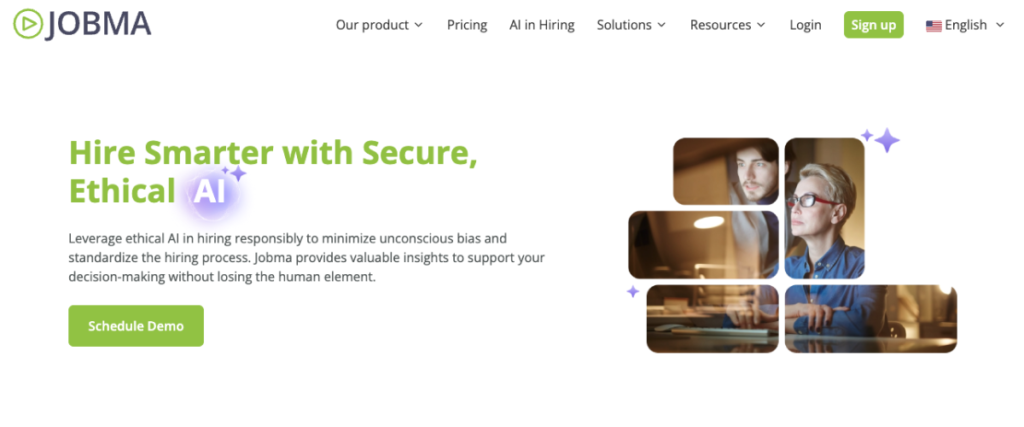
Recommended Platform: Jobma
Jobma is an AI-powered video interviewing platform that offers pre-recorded interviews, live interviews, autonomous AI interviews, and candidate evaluation tools. You can screen candidates and even use it to evaluate internal employees for potential promotion or role changes. Over time, data from interviews, performance, aptitude, communication, and cultural fit can feed into your talent map, enriching candidate profiles beyond CVs and skills matrices.
Why this matters for talent mapping:
- Combines skill-based and behavioral assessments, giving a fuller picture of candidate potential.
- Reduces bias and increases objectivity by standardizing initial screening while maintaining scalability.
- Speeds up identification of strong external or internal matches for future roles, without waiting for active hiring cycles.
2. Talent Sourcing & Candidate Discovery
Talent sourcing platforms scan vast professional networks, public profiles, and passive talent pools to surface candidates who may fit future roles, often before they’re actively looking. Modern AI sourcing tools help recruiters identify qualified candidates faster by analyzing skills, experience, and digital footprints across multiple professional platforms. These platforms use AI to match skills, experience, role history, and more according to your competency frameworks.
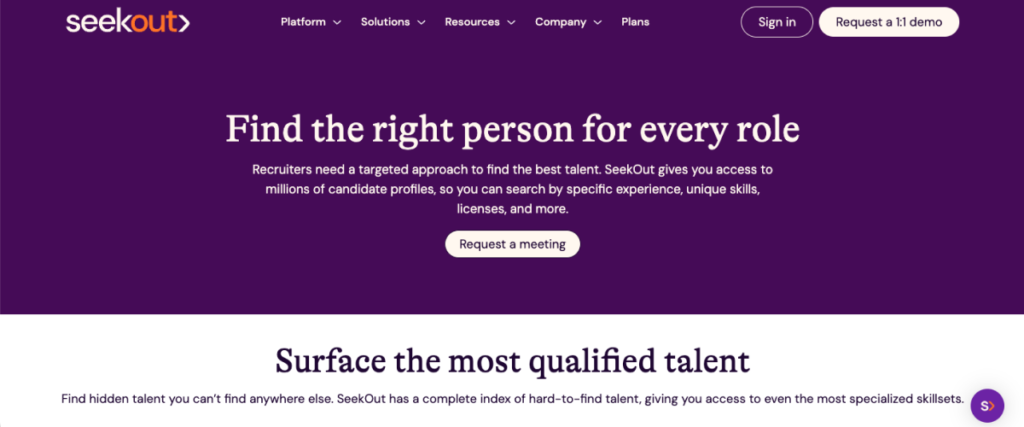
Popular Platform: SeekOut
SeekOut is an AI-powered talent sourcing and talent intelligence platform that helps you identify ideal candidates from a database of millions of profiles. The platform pulls data from public profiles, technical communities, research publications, GitHub contributions, and specialized industry segments. With advanced talent search filters, skill-specific queries, and AI-generated candidate summaries, SeekOut makes it easy to build well-structured pipelines for future or hard-to-fill roles.
Why this matters for talent mapping:
- It helps build external talent pools pre-emptively, not just when a role opens.
- It expands reach beyond traditional job boards, catching passive candidates with high potential.
- It allows you to segment talent by skills, geography, experience level, and niche expertise, creating targeted, future-focused pipelines.
3. Talent Workflow Management
Talent intelligence platforms, essentially Applicant Tracking Systems (ATS), play a critical role in talent mapping. These organize candidate data, centralize hiring workflows, and standardize the way information is collected during recruitment. These platforms don’t just assess skills, but also ensure every interview, resume, and evaluation note is stored in one place, categorized correctly, and usable for long-term workforce planning. An ATS provides consistent, searchable talent data you can pull from when building future pipelines.
4. Talent Hiring & Placement
Talent mapping defines what skills and roles an organization will need. Hiring and placement tools help execute on those insights by turning workforce plans into real, operational teams. Once gaps and future roles are identified, companies need reliable ways to source, evaluate, and integrate talent without slowing down execution or compromising quality.
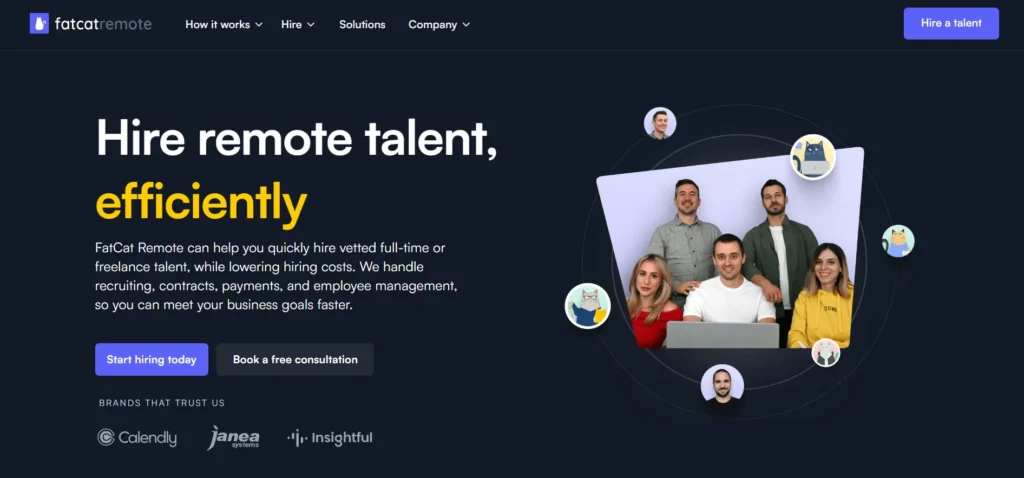
Popular Platform: FatCat Remote
FatCat Remote is a full-service remote hiring platform that supports talent mapping efforts by helping companies act on identified skill gaps and planned roles. It connects companies with vetted remote professionals, handling contracts, compliance, and ongoing engagement management. This enables the translation of strategic workforce planning into stable, long-term collaboration, particularly for complex products such as online marketplaces.
Why this matters for talent mapping:
- Helps operationalize talent mapping insights into real hires
- Reduces friction between workforce planning and execution
- Supports long-term role continuity, not just short-term staffing
- Enables faster response to identified skill gaps
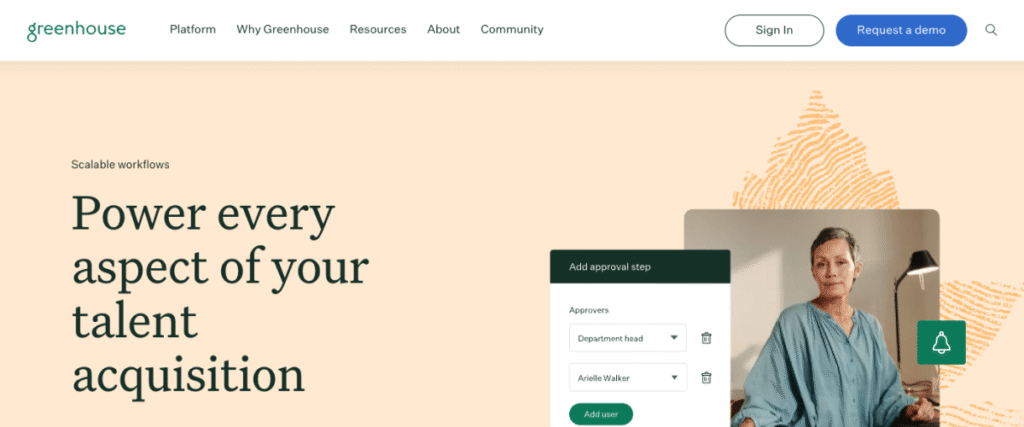
Popular Platform: Greenhouse
Greenhouse is an applicant tracking system designed to bring structure, consistency, and predictability to the hiring process. It helps you manage candidates through clearly defined pipeline stages, automate communication, and keep all candidate information in one organized place. This data is extremely valuable when building talent maps because it highlights patterns in candidate strengths, skill gaps, and long-term readiness across different roles.
Why this matters for talent mapping:
- It centralizes all candidate data, feedback, and hiring activity, creating a long-term talent repository you can search and reuse.
- It makes patterns visible, such as which backgrounds, experiences, or sources produce the strongest candidates for specific roles.
- It enables you to tag and revisit top past candidates, helping build warm pipelines for future openings.
- It highlights pipeline bottlenecks, recurring sourcing gaps, and role-specific challenges, so teams can plan hiring needs proactively.
Endnotes
Talent mapping is more than recruitment, it is a strategic process for aligning human resources with long-term business objectives. When implemented with clear goals and competency frameworks, talent mapping drives hiring efficiency, internal mobility, skill development, and talent retention.
Combining AI-powered sourcing, skills assessment, and interview platforms enhances the quality and readiness of your talent pool, ensuring you are prepared long before roles open up.