


Employee Promotion Guide for HR Leaders
Tired of losing top talent to competitors? One of the most powerful growth strategies that often sits right in front of organizations is existing employees. Employee promotions are more than a reward for good performance. They’re a strategic function that strengthens retention, builds a leadership pipeline, and improves long-term organizational stability.
As organizations shift towards skill-based hiring, promotions have evolved from a simple vertical climb to a dynamic movement of talent within an organization. When employees see a clear path for advancement, they’re also more likely to stay engaged, motivated, and committed.
What are Employee Promotions?
Employee promotion refers to the advancement of a worker to a higher role with greater responsibility, pay, status, and authority within the same organization. In Human Resource Management, it serves as the ultimate tool for succession planning, talent development, and performance-based retention strategies.
Types of Employee Promotions
Understanding the nuances of how people move within your company allows for more flexible organizational design.
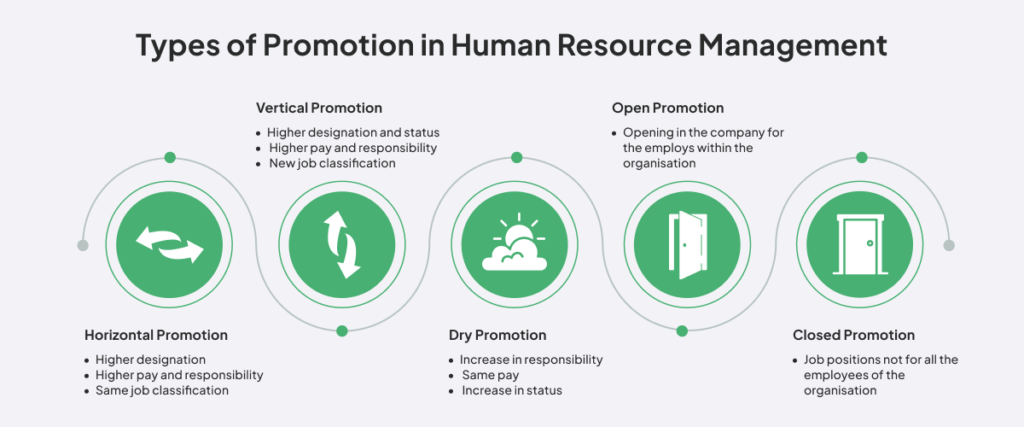
Horizontal Promotion
A horizontal, or lateral promotion, involves moving an employee to a different department or role at the same level. It may not include a significant raise in the salary, but it improves the employee’s skill sets.
Example: An ad copywriter moving to a social media strategist role at the same level within the company.
Vertical Promotion
This is the traditional move “up the ladder” where the employees move to a higher-ranking position with greater responsibility, authority, and compensation. They’re often tied to leadership development and succession planning.
Example: A marketing executive becoming an assistant marketing manager.
Dry Promotion
Where an employee receives additional responsibilities or a new title, but no increase in compensation. While dry promotions can sometimes be used during organizational restructuring or transitional phases, they can often lead to disengagement.
Example: A senior developer being given the title of team lead without a change in salary.
Open Promotion
A transparent process where the vacancy is announced to the entire organization, and any eligible employee can apply. This fosters a culture of fairness. This model is especially effective in larger organizations that prioritize structured internal mobility programs.
Example: A company posts an internal opening for a sales manager position, allowing all qualified sales representatives within the organization to apply.

Closed Promotion
When leadership selects a candidate directly without publicly announcing the opportunity internally. This approach is appropriate when the role demands specialized skills and a successor has already been identified.
Example: A senior financial analyst is directly promoted to finance manager after being mentored by leadership for the role.
Why Employee Promotions are Important: The Benefits
By promoting employees fairly within the organization, you can boost performance, cut hiring costs, retain talent, and much more. Let’s look at the list of the benefits:

Improves Employee Retention: Lack of career growth is one of the leading reasons employees leave organizations. When advancement opportunities are visible and attainable, employees are more likely to remain committed. Promoting from within demonstrates that the organization values long-term development, not just short-term performance.
Increases Motivation & Engagement: Promotion validates effort, performance, and contribution. It serves as recognition and reward. When employees see their peers advancing, it reinforces a culture of growth. Motivation increases not just for the promoted individual, but across the team.
Cost-Effective: Replacing a mid-level employee with an external hire can cost anywhere between 1.5x – 2x of their annual salary. Promoting internally eliminates the need for screening, interviewing, onboarding, and extensive training, so you get talent with the right skills for a fraction of the cost.
Build a Strong Leadership Pipeline: Organizations that prioritize internal promotions develop leaders who understand company culture, systems, and expectations. This strengthens succession planning and reduces disruption when leadership transitions occur.
Institutional Knowledge: Promoted employees already understand your culture, clients, and internal tech stack. You will not have to invest in training or the risk of hiring someone externally with no knowledge of the industry.
Strengthens Employer Brand: Companies known for promoting internally attract ambitious candidates. Job seekers want to join companies where they can grow. Career progression becomes part of the employer value proposition, making the organization more competitive in the labor market.
Signs an Employee May Be Due for a Promotion
Proactively identifying high-potential talent can strengthen retention and improve morale. With high performance as the baseline, here are the key signs an employee may be ready for promotion:
Consistent High Performance: They consistently meet and exceed expectations in their current role.
High Ownership: They take initiative and ownership of their work and the outcome. They also take responsibility beyond assigned tasks and proactively solve problems.
Show Initiative: They proactively identify business needs and solve them before being asked.
Adaptability: They are able to handle shifting priorities without losing focus on broader goals.
Growth Mindset: They actively seek out feedback and actively work on upskilling independently.
Collaborative: They contribute positively to team dynamics and influence others constructively.
Internal Promotion vs External Hiring
Organizations are often faced with the decision of whether to promote internally or hire externally. Both approaches have value.
| Internal Promotion | External Hiring |
|---|---|
| Faster onboarding | Longer adjustment period |
| Lower recruitment cost | Higher sourcing cost |
| Cultural familiarity | Fresh perspective |
| Boost employee morale | May disrupt team dynamics |
Internal promotions reinforce stability and retention, while external hiring introduces new ideas and skills. Balance both, promote from within when possible, and hire externally to fill skill gaps.
Best Practices for an Effective Promotion
To ensure your promotion process is fair and data-driven, follow these tips:
Set Clear Criteria: Establish measurable benchmarks, such as performance ratings, skills and competencies, tenure, and business impact. Having this clarity will reduce the perception of favouritism.
Use Structured Performance Review: Using regular, documented evaluations can help identify high-potential employees objectively rather than relying on informal impressions. When your promotion decision is data-driven, it strengthens credibility and fairness.
Align Promotions with Business Needs: Promotions should address organizational gaps and solve business problems. Treat internal candidates with the same professional rigour as external ones. This way, you can make sure that you’re promoting the right talent.
Invest in Development: Learning and development must be an ongoing process; this way, you can make sure that your employees are equipped with the skills required for their role. Providing training, mentorship, and leadership preparation also increases the likelihood of success in advanced roles.
Ensure Pay Equity: Make sure that the new salary aligns with market standards and internal parity. This way, you also avoid the risk of having your newly promoted employee quit their role for a better opportunity.
Final Thoughts
Strategic promotions build loyal, high-performing teams while slashing turnover costs. These are strategic decisions that influence retention, engagement, leadership development, and organizational stability. Prioritize them in your HRM strategy for long-term success.